She’s an artistic baddie in the Islamic Caliphate Republic of New Yorkistan!
The Gen-Z Arab baddie, who illustrates political poetry, has earned her spot next to Mayor-elect Zohran Kwame Mamdani. Rama Dujawi (1997) is a Syrian-born ‘incredible artist who deserves to be known on her own terms’. She has published and exhibited her work in highly reputable spaces within the modern capital of the arts, cementing her reputation and style for political illustration through a distinct artistic style. Embodying the elements of her heritage and profession, she utilises her privileges, skills, and platform to inspire women and revolutions.

Source: Rama Duwaji: From VCU Arts to New York’s First Lady
The cool, single girl, living in a city apartment era, is soooo back!
Zohran Mamdani’s mayoral race was a godly dose of optimism and hope for class consciousness. We’ve witnessed a global audience paying close attention to a progressive political movement and seeing tangible solutions presented by a brown, Muslim man in America. This was skilfully accomplished by capitalising on the priceless currency of attention; anyone with a cell phone and engaged with the global north’s politics knows Zohran and his policies for New Yorkers.
I myself am the perfect example as an Iraqi-Kurd who lives in South Australia, but more importantly, an Arab political artist and community organiser who closely monitors American politics. This rise of populism is aligned with an international movement that is uniting the working class under capitalism.
Against all odds and millions of dollars, Zohran’s campaign demonstrated that standing firm for one’s beliefs while reflecting the community’s needs and offering tangible solutions is a winning strategy.
Rama is credited with being an essential part of Zohran’s political campaign– a political and strategic partner rather than just ‘The Mayor’s Wife’. Reports from multiple sources show that she’s sprinkled her artistic direction onto several areas, from the visual marketing to shaping the overall feel of the campaign. “Her campaign design wasn’t just for the community; it was of the community, making people feel seen and valued”, Katie A. Lauderbaugh.
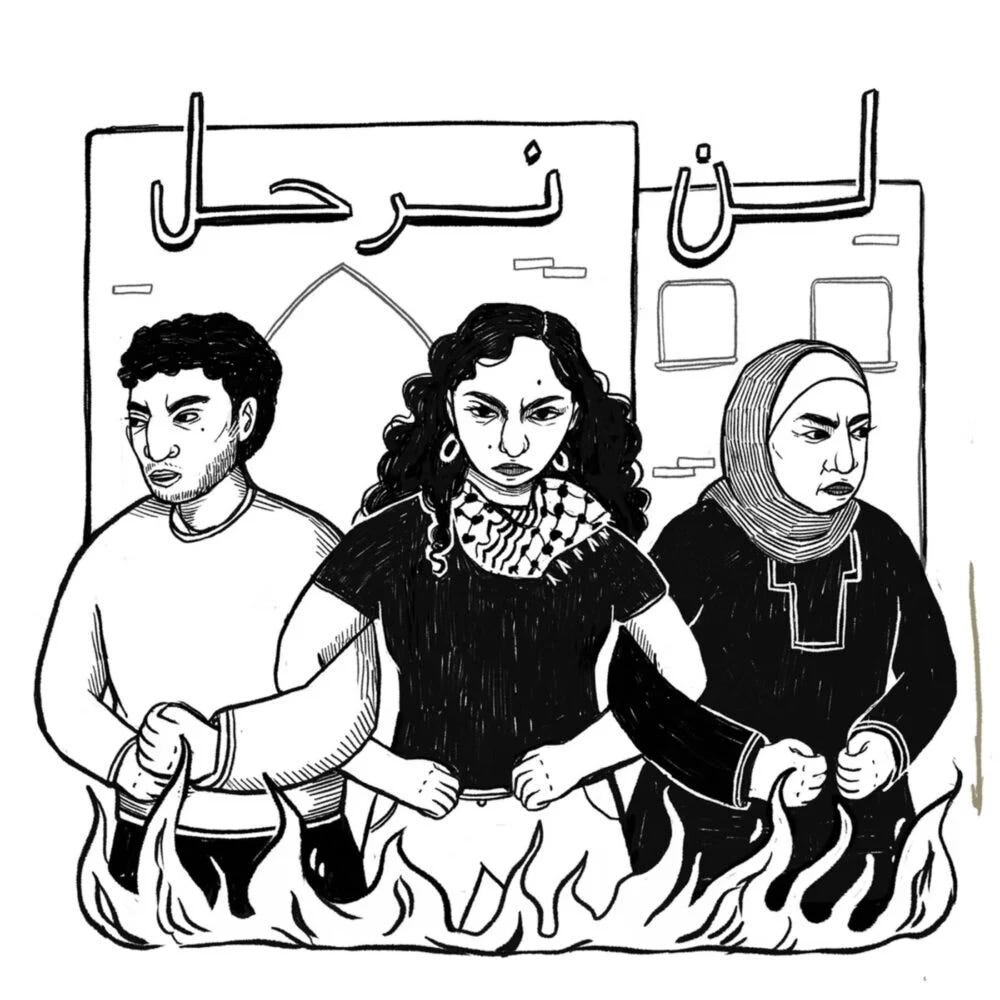
Source: RVA Magazine.
We have most recently witnessed Rama’s artistic touch when Zohran incorporated a performance arts piece into his campaign to engage with voters. Inspired by one of my problematic faves in the arts, Marina Abramović (no, diva, Captain Cook did not ‘discover’ America), Mamdani’s 12-hour, long-endurance performance was an act of service to his electorate; to sit and listen to the people you’re serving. After years of emailing, calling, protesting, and knocking on the doors of politicians with no help, the people yearn to be heard by their representatives. This is a prime example of the magic of engaging everyday people with politics through the arts.

By referencing successful historical tools, such as political art, Rama thoughtfully presented a concept and connected it to this modern setting, proving the importance of artists in political movements.
Now, we must address the elephant in the room: Islamophobia. It was unimaginable for someone from Zohran’s political and cultural background to be the Mayor of New York City less than 30 years post the events of September 11th. We saw how bigoted attacks were casually weaponised across the entire Mayoral race. The ease with which Islamophobia is systemically implemented and rewarded within the American political apparatus allowed for the weaponisation of every aspect of Zohran’s identity; from his African and South Asian heritage and Muslim identity to his socialist views.

Source: The New York Post.
Yet, the same bigoted campaign could have resulted in serious political scrutiny if it were targeting any other group protected by the current Imperialist standards. For instance, over 600 individuals have lost their jobs for online posts related to the assassination of Charlie Kirk.
And with that much public bigotry comes a predicted heavy wave of misogyny towards Rama. To be in this new position where she is expected to act in the traditional Western, patriarchal role, which contradicts how Rama presents herself online. On top of all these social pressures, as BIPOC women in the Global North, we are battling racism and the Western patriarchal standards that double down on the dehumanisation efforts. However, Rama is not ashamed of her identity; she has not whitewashed nor colonised her existence, her art, or her online presence.
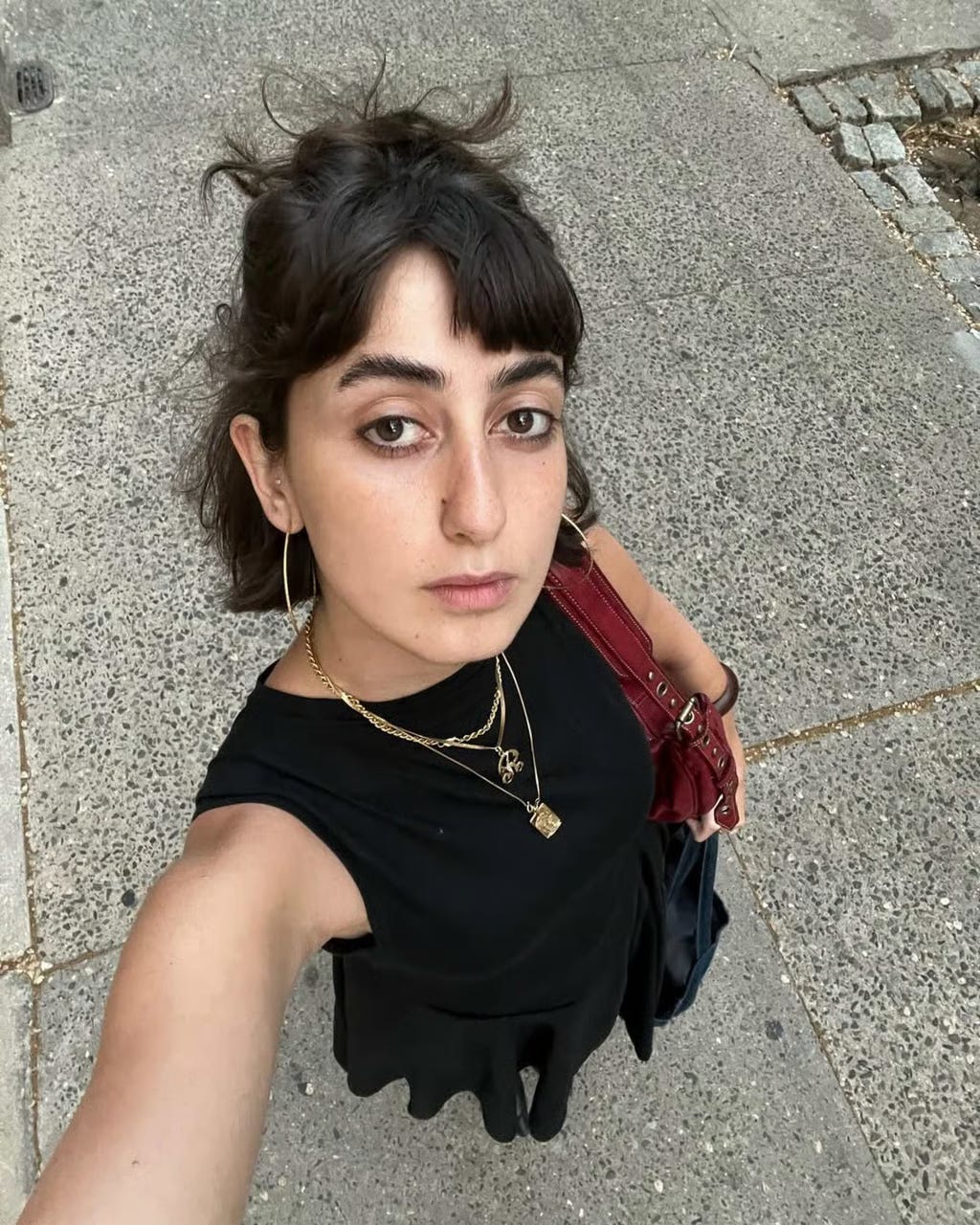
Source: Rama’s Instagram
Heavy is the crown of the Muslim Artist, pro-liberation Arab girl standing face-to-face against Western media.
My friends and I often discuss the difference in patriarchal standards in our home countries (Kurdistan, Lebanon, Palestine, Iraq, Jordan, Egypt, Malaysia, Turkey, etc.) and often notice how there is an underlying level of racism that we don’t experience as we face the patriarchal standards at home.
There is an incredible line in this song, JASADIK-HOM جسدكهم by DAM
حتى بالنضال عندي
اضعاف من مسؤوليتكم
اذا انت بتقاوم بتمس في صهيونيتهم
اذا انا بقاوم بمس كمان بذكوريتهم
This includes the sexualisation and fetishisation of brown and black bodies through a colonial lens at work, in the arts and Western culture as a whole. And for Rama to occupy this position of power, she is redefining the conversation about intersectional identities and redefining the social expectations of existing in multiple spaces.
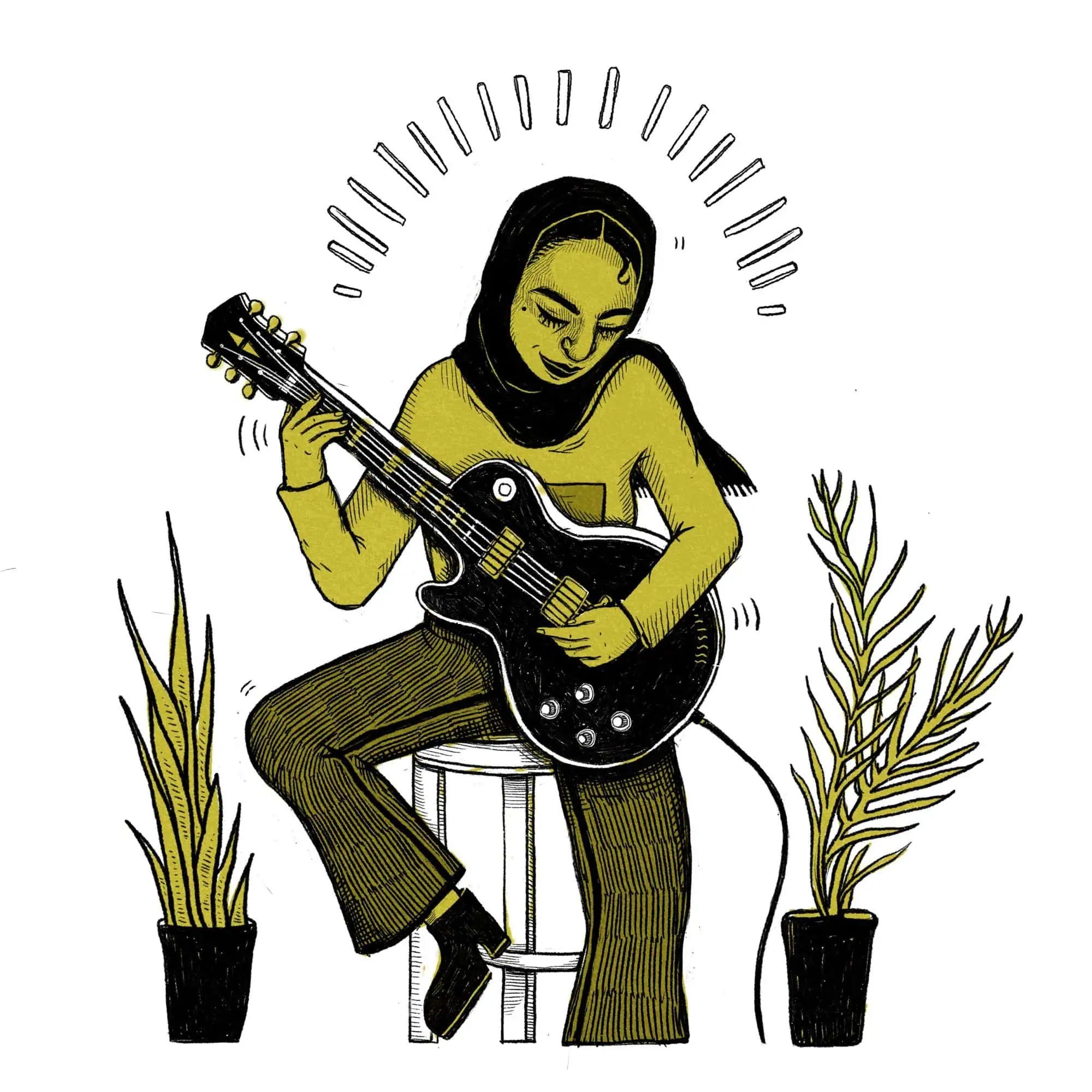
Source: YUNG magazine.
Yahoo: She is far removed from most First Ladies of yesteryear, whose public personas existed largely as extensions of their powerful partners. It may not be a conscious effort, but Rama’s online presence resists that fate. And her dynamic with Zohran—where he praises her emphatically and often openly while she remains low-key—has been well-received online. This whole “aloof” descriptor might’ve just offered a loose framework for what a happy, balanced straight relationship can look like in a society that’s increasingly skeptical of them.
As someone who belongs to the diaspora communities Zohran and Rama both come from, we have witnessed the rise of young Muslim women becoming independent, focused on self-nourishment, travel, self-exploration, and evolving as individuals. We no longer view marriage as a goal or an aspiration, nor as a necessity to live in society, but rather as an optional social contract; why settle for anyone at all if not the best?
However, we are simultaneously witnessing the rise of the trad-wife movement, and Rama is an oxymoron to this Western conservative idea of womanhood and the role of women in the wider society. This backwards virus has infected the SWANA, Arab, and Muslim communities as well; Gen-Z and Gen-Alpha young women are aiming for marriages rather than higher education. They are romanticising the idea of relying on men and the patriarchy to live, not yet realising that ‘returning to traditional gender roles is mired in potential pitfalls for women, including vulnerability to abuse and control’.
Years of academics, researchers and activists working towards liberation from the patriarchal systems within families and Western capitalist societies are being erased with the rapid rise of illiteracy and conservatism.
No, girly, he does not love you if he is forcing you to stop your education.
But, there’s still hope! Rama exists in a period where older Gen-Z women are at the forefront of political movements, leading and uniting communities towards liberation. Our efforts are felt on a macro and micro scale, but especially for artists, as a testament to an ultimate truth: we exist as artists; therefore, we are political.
Rama is truly a breath of fresh air amidst the signs of an empire’s collapse.
The global attention may also attach itself to heavy expectations to present herself perfectly at all times. However, she has already become a leading figure in the global uprising of marginalised women spearheading global uprisings. And those women have never been favoured by the establishment, but will be admired by the public. We can clearly see that she has the potential to be on a Princess Diana level of activism and public engagement. But Rama will take it beyond; she is not attached to a Monarchy, she is a young, free artist, and has shown already what she plans to stand for. Her roots and current place of residence allow for room to dream of radical, positive change.
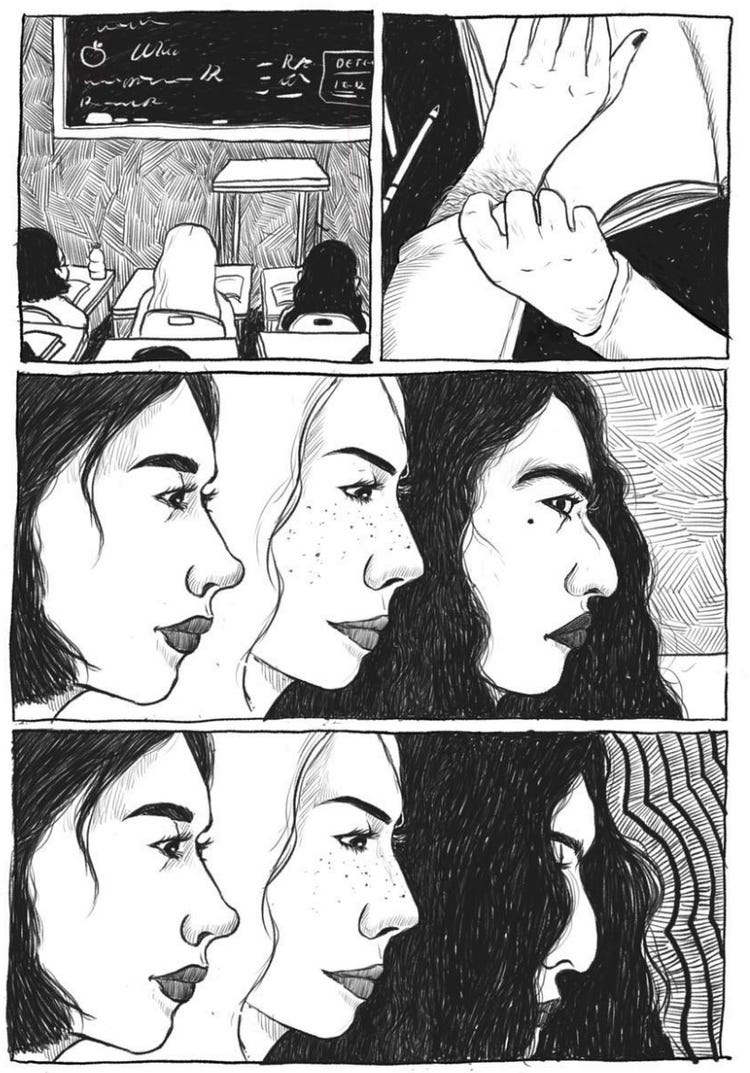
Source: Maamoul Press, Rama Duwaji on Western beauty standards and 'Razor Burn'
Further, Rama not only upholds her responsibility as a BIPOC artist, but she also understands the importance of her new political position. This is evident by Rama’s first public appearance as the First Lady, which was at the announcement of Zohran’s win of the Mayoral race. She appeared on stage in a custom piece by Zeid Hijazi, the Palestinian-Jordanian artist whose work reaffirms the testament that fashion is always political. Rama’s made a deliberate choice that acknowledges Palestine, reaffirming her very public political beliefs, ensuring that the conversation will always circle back to one of the most urgent causes of our time; there is an ongoing genocide, and New York is the City of Capitalism related to the system upholding said genocide.
It is also important to highlight the other fashion choices on the stage; Dr. Mahmood Mamdani, a revolutionary academic, professor and author, whose work has informed the work of other global academics and researchers, alongside the famous artist, director, and ‘the producer of the candidate’, Mira Nair, also appeared to be wearing traditional clothes. This decolonial approach to celebrating their son in front of a global audience reflects the beauty of the diversity in their family. This family portrait is a testament to the changing times in politics and the world.

Source: Bloomberg Media.
This moment is an important timestamp in our modern history. We may think what happens in New York doesn’t affect the rest of us, but it often does. Fashion reflects time periods, the economic status of societies, and, more importantly in this instance, centers the focus of our conversation back to the political climate of 2025 during Trump 2.0.
For someone whose voice I can’t even find online, the not-so-quite statement of the embroidered black bodice and fierce presence, Rama ensured that she did not need to say a single word to make a statement. Throughout history, wearing black clothing has had multiple and often contradictory meanings. At times, it signified death, power, elegance, urbanity, subversion, and sex appeal. We were given a lesson on all the different forms of activism and utilising the spotlight for the betterment of humanity, rather than self-serving purposes alone.
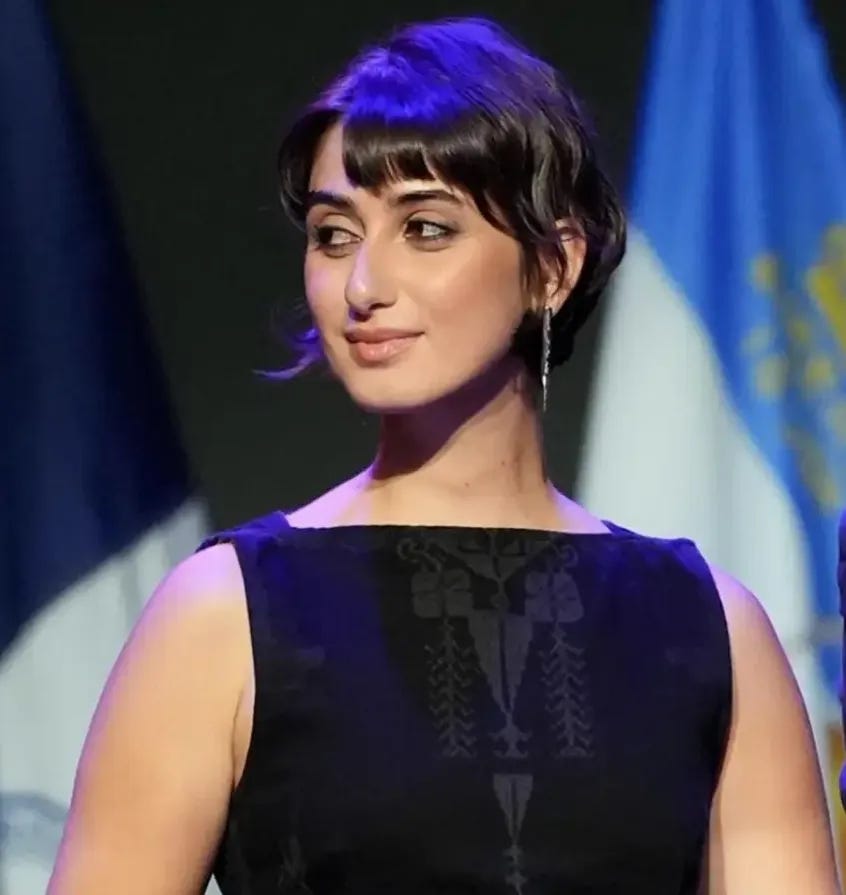
Source: Bloomberg Media.
Creating art is proof that we have been connected and will stay connected through our struggle towards liberation. We must write our history and the atrocities committed by the ruling class, and record the evidence of their crimes. Rama illustrates those moments in history; she writes poetry for the souls we’ve lost, for the women still fighting, and for the next generation we’re raising. She paints Arabic calligraphy that echoes the bleakness of the world, knowing sometimes Arabic is the only appropriate language that carries the weight of this pain. And during times where Pantone announced the colour of the year for 2025 is C(KKK)loud Dancer, perfectly matching the rising tones of white supremacy, fascism, and colonial violence.
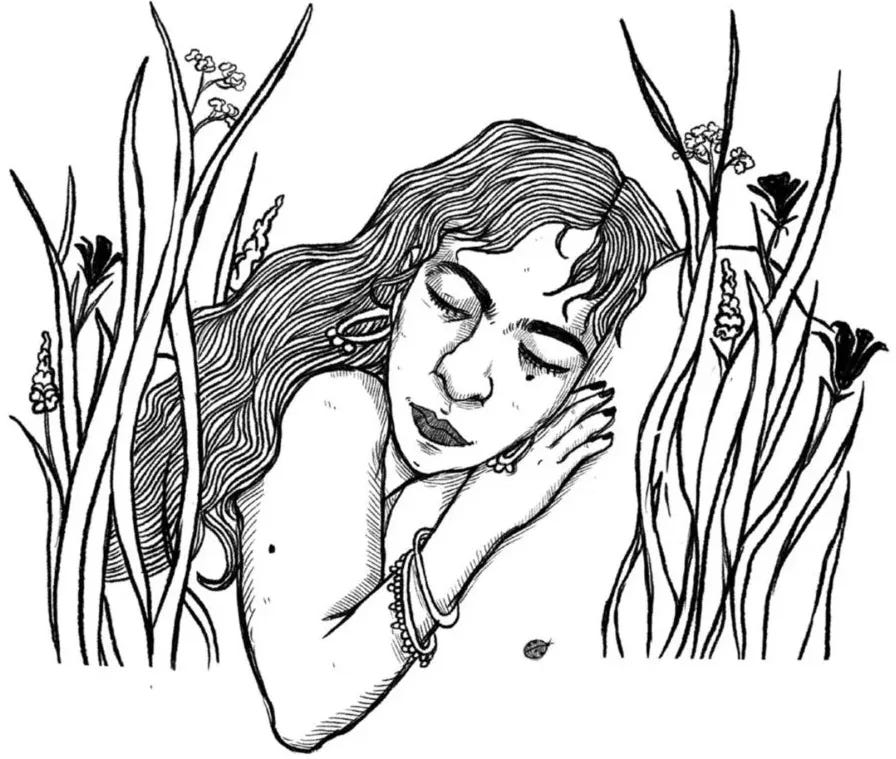
Source: RVA Magazine.
However, as artists, we must also illustrate our vision of a free world for the people fighting, for the children who are watching their world be shaped by imperialist politics and capital gain. We must visualise and create a prosperous future through any means—to paint the solutions that surpass the protest, we have to orchestrate the melodies to march the streets and songs to celebrate our small and large victories. It is important to paint the struggles, but we need the motivation of what the reward would look like, too.
Look, I am aware of the parasocial hints in some of the statements I’ve made so far. After all, these people are strangers and live halfway across the world from most of us. But all we could do is give them the benefit of the doubt and hope they could serve their communities and humanity to the best of their abilities. However, if all nepo babies nepo’ed this hard, they’ll never hear us complain about their undeserving roles in Hollywood. They should all go on hunger strikes with the Taxi Drivers’ Union and guarantee wages and job security for the working class. Yes, more nepo babies should all mobilise the community towards collective beneficial efforts and use their privileges and positions of power in the service of others. And finally, yes, to putting Adam Friedman in his place when he calls Rama ‘your girl’.
Now, going back to the question, why is Rama such an important figure that all women, but especially Muslim, Arab, and BIPOC women and girls, should watch? Firstly, she truly embodies us in the best of ways. We are passionate, articulate, opinionated, vocal, fierce, determined to make a change, and above all, willing to put ourselves at the forefront of liberation movements. The era where the BIPOC woman was seen as this quiet, shy, exotic figure is long over. We are now seen for who we are, who we’ve always been: political figures, freedom fighters and revolutionaries.
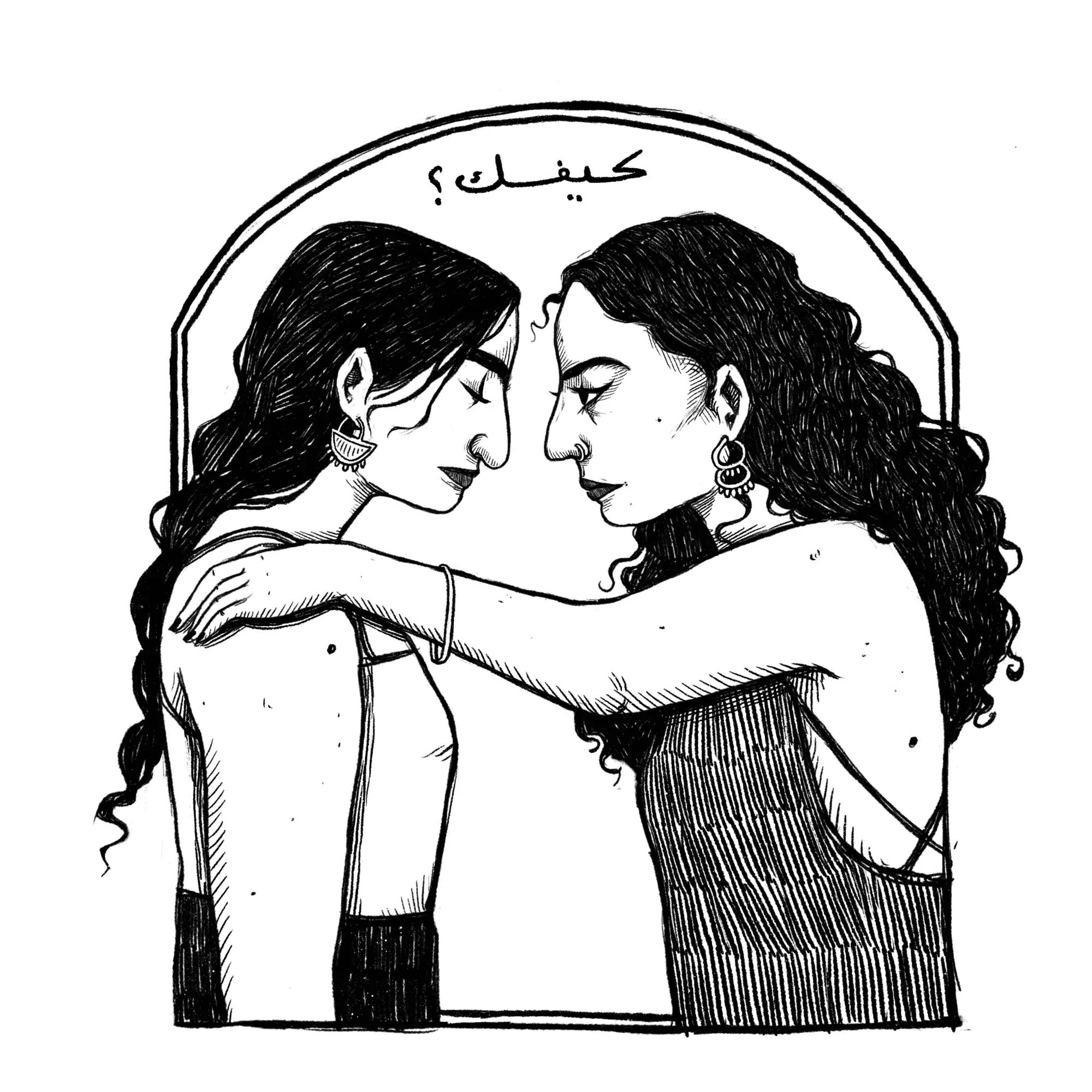
Source: YUNG magazine.
Moreover, Rama is showing the world that we will utilise our crafts, our art, our platforms, our bodies, and juicy brains to speak up for justice and humanity. I’ve recently had a lovely conversation with some BIPOC folks about the role of the artist in politics. I view it as a responsibility that we record history. It’s what we’ve consistently done, from cavemen to our current times. Artists create culture, we record the crimes of our leaders and the victories of our heroes. We also have to visualise a hopeful future, not just the doom and gloom part of it. To create works that speak to humanity about our collective struggles and common language in joy and grief.
So, let’s celebrate the Rama’s that have birthed us, the Rama’s of today and the Rama’s we are raising. May our collective efforts unite us in our fight towards an equitable, just and free future for all people.
Free Palestine, Sudan, Congo, and freedom for all people of the world.